Rosyth Dockyard 3 – 1900 The need for new naval bases
| < 2 – A Short History of Rosyth Dockyard | Δ Index | 4 – 1903 Selecting a site > |
In the early nineteenth century, the Royal Navy strategy in time of war was to place a large fleet of ships outside an enemy harbour to form a close blockade. However the development of the submarine made that approach very dangerous – a large static fleet could be wiped out by submarines – like shooting fish in a barrel!
By the 20th century the navy adopted a ‘distant blockade’ strategy – a large fleet was held on instant readiness in a well-guarded home port, from where they could launch an attack in open water if the enemy fleet took to sea. The submarine threat was much reduced when the fleet was underway, because surface ships are able to travel much faster than submarines, and they present a difficult moving target.
The problem with this approach was that the Royal Navy’s existing bases were all located along the south coast of England. They had been built to protect the English Channel from the old enemies of France and Spain.
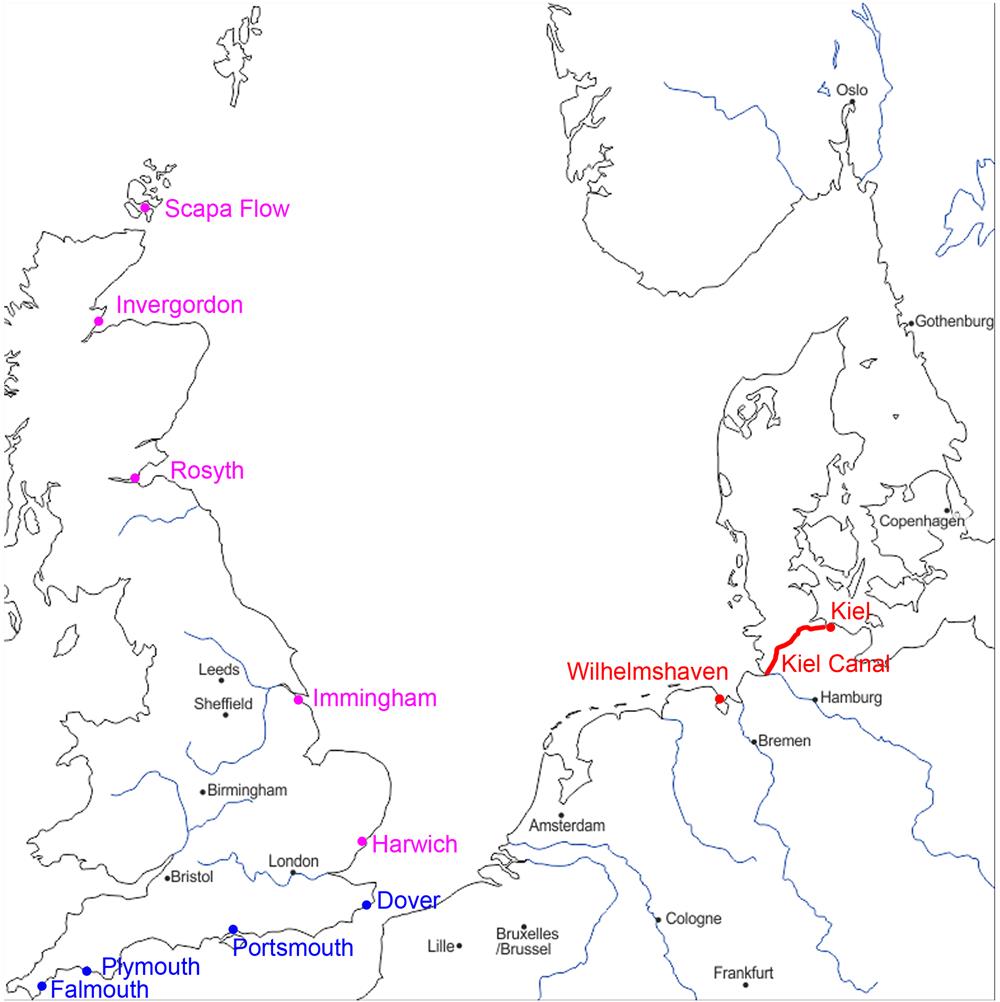
New bases were urgently needed on the North Sea coast to counter a potential threat from the growing German High Seas Fleet based at Wilhelmshaven. Three sites were chosen: Scapa Flow in Orkney, Invergordon at Cromarty Firth and Rosyth in the Firth of Forth.
| < 2 – A Short History of Rosyth Dockyard | Δ Index | 4 – 1903 Selecting a site > |